Start with what is already fixed
Block the things that happen whether you plan them or not: meetings, school runs, appointments, the gym you have already paid for. This is not planning yet, it is drawing the walls of the room you are about to decorate.
Then block only the big things
Most beginners try to account for every fifteen minutes, discover they are thirty minutes behind by 10am, and abandon the whole thing. Instead, block at most three substantial pieces of work — an hour or ninety minutes each — and leave the rest of the day unallocated.
- One block for the thing that matters most
- One block for admin and messages
- One block leftover for whatever the day brings
Build in buffers
A block with no gap after it will always overrun into the next one. Leave ten to fifteen minutes between blocks. Buffers are not slack; they are what keeps the plan credible by Thursday.
Treat the block as a promise, not a cage
If something urgent lands, move the block rather than deleting it. A block you have deliberately rescheduled still happened as a decision; one you quietly dropped teaches you to stop trusting the page.
Where this lives in a planner
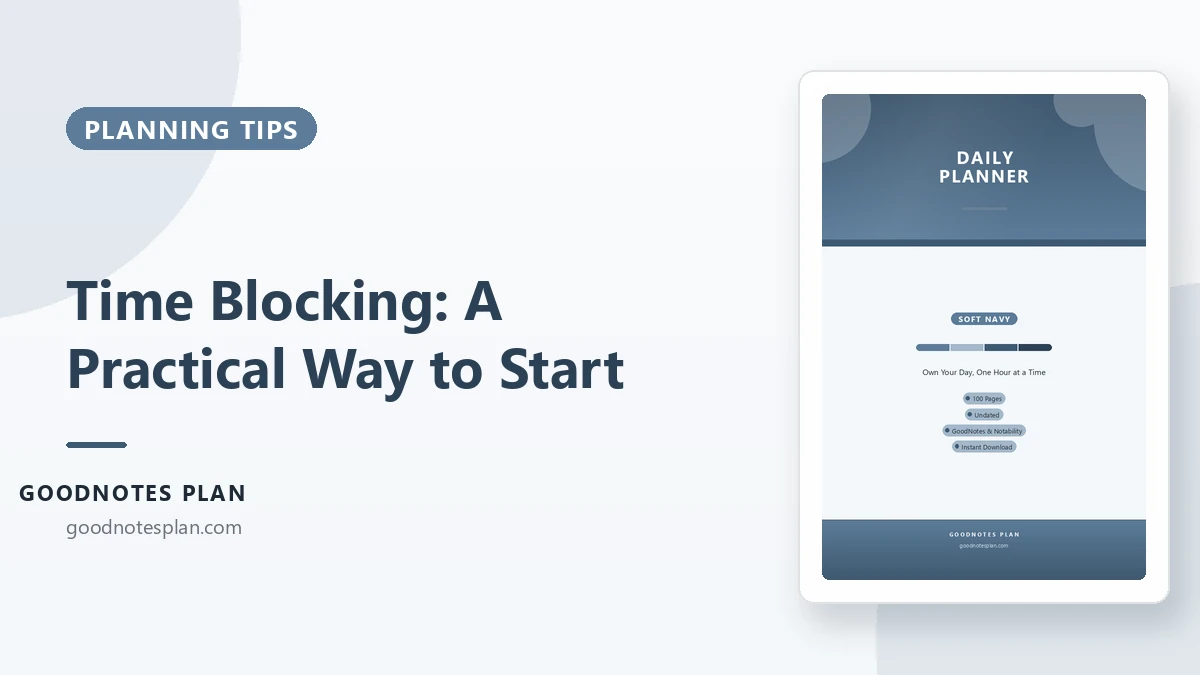
Every technique above has a home on the Daily Planner — Soft Navy — undated, A4, and ready for GoodNotes, Notability or a home printer. Not ready to buy? Download the free starter kit and try the method first.