The 6pm question — "what are we eating?" — gets expensive. It costs a takeaway, a wasted shop, or a scrambled bowl of whatever is left. The fix is not more discipline in the evening. It is twenty minutes on a Sunday, on one page.
Step 1: pick the week's pattern
Do not plan seven brand-new meals. Decide the pattern instead: how many cook-from-scratch nights, how many leftovers nights, how many nights out or from the freezer. A realistic week has two or three real recipes, not seven.
Step 2: plan around the calendar
Look at the week before you choose meals. Tuesdays are not Fridays. Put the quick meals on your late nights and save the slower one for the evening you are actually home.
Step 3: build the list from the plan
Write the shopping list straight from the meals, working through the fridge first so you are topping up rather than rebuying. Group by aisle if your shop has a layout you always follow — it saves a lap every time.
Step 4: one prep task, not five
Do not spend Sunday cooking. Do one job that pays off all week: chop the vegetables, cook a pot of grains, or prep a protein. One. The rest happens on the night.
Step 5: leave a leftovers slot
Deliberately plan a leftover night, or a "whatever is in the fridge" night. Over-planned weeks break first, and a broken plan tends to take the whole shop with it.
Keep it on one spread
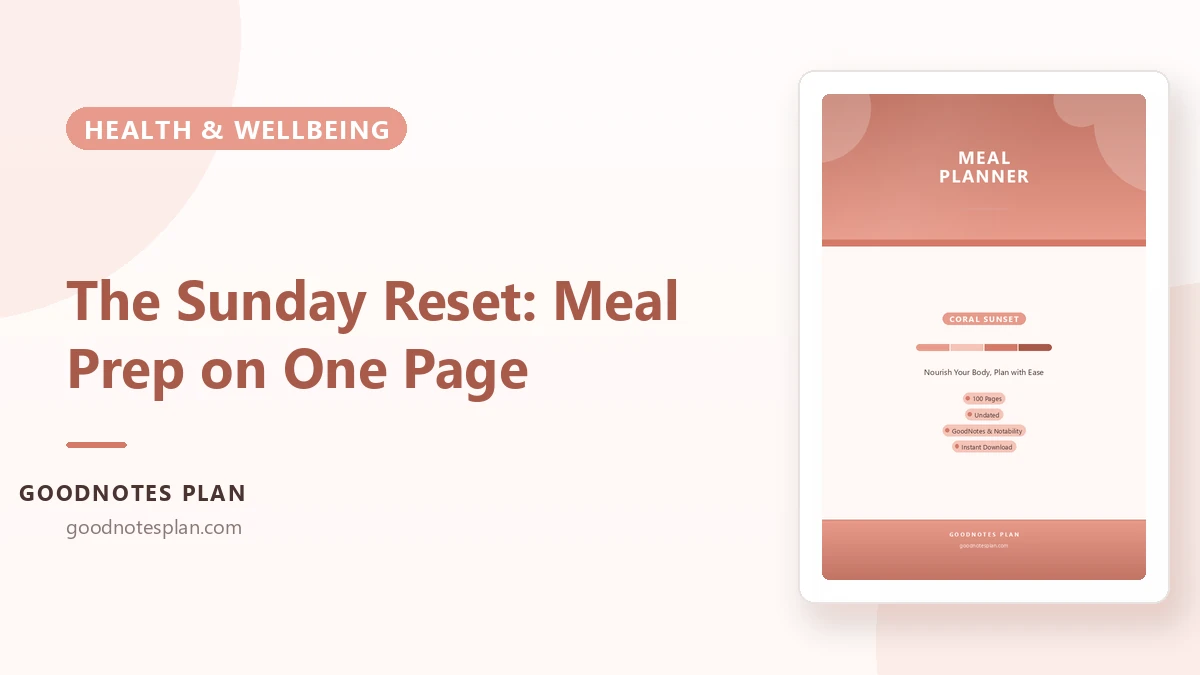
The Meal Planner in Coral Sunset puts the weekly meal grid, the grocery list and a recipe notes panel on the same spread, so the plan and the list never drift apart. Undated and A4 — print it weekly or keep it on the tablet.
If you want the shopping list to survive the shop, add the 20-minute weekly meal plan ritual to your Sunday.