Most habit trackers die the same way: too many rows, each one a small daily accusation, until opening the page feels like homework. The grid is not the problem. The habit list is.
Why track habits at all
Not for motivation — for feedback. A tracked habit tells you the truth about frequency, which is usually less flattering than memory. You cannot argue with a column of empty boxes.
Five worth the ink
- Sleep anchor. A consistent bedtime does more for the other habits than any of them do alone.
- Movement. Twenty minutes counts. The point is regularity, not intensity.
- One daily deep-work block. Even thirty protected minutes changes what a week produces.
- Reading. Ten pages is a book a month, and it is the easiest habit to keep.
- A screen-free hour before bed. The habit that makes the sleep anchor possible.
Five to drop
- Anything you have to lie about. If you fudge the box, the habit is not yours.
- Two versions of the same habit. "Run" and "go to the gym" both mean move. Pick one row.
- Habits that need a good day to complete. Track the minimum version, not the ideal one.
- Somebody else's habit. Cold showers are not a personality.
- More than six rows. Past six, the page becomes a report rather than a nudge.
Run the grid loosely
Missing a day is data, not failure. The useful question is never "am I perfect" but "how often, and what tends to break the streak". Write the break reason in the margin — that note is usually the most valuable thing on the page.
A grid built for five or six
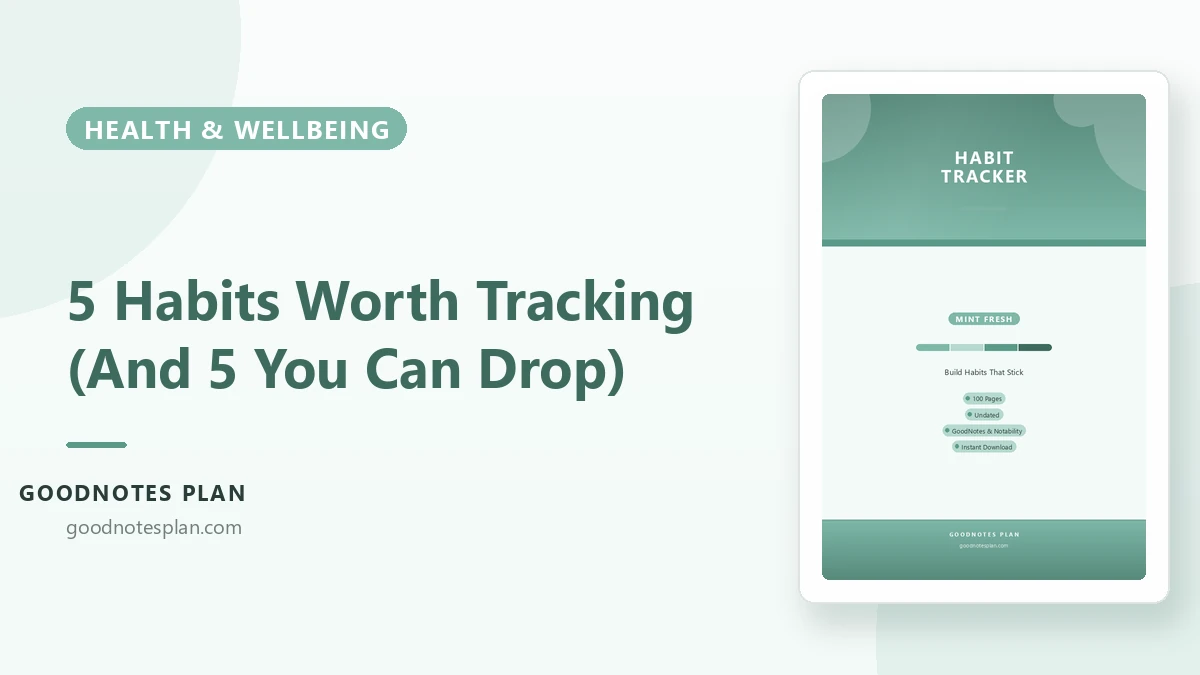
The Habit Tracker in Mint Fresh is a monthly grid with room for up to twelve habits, streak columns and a weekly summary, so six honest rows fit comfortably. Undated, A4, and reusable every month.
Read the setup rules in how to build a habit tracker you will actually keep.